CS2 Smurfing Explained: What it is and Why it Might be Worse than Cheating
Smurfing is without a doubt one of the most annoying problems that Counter-Strike 2 has.
It’s a widespread issue that plagues matchmaking, creating one-sided matches that inevitably end in loss and frustration. This happens to brand-new players and veterans alike, and in fact, the more hours you put into the game, the more likely it becomes that you will run into a Smurf that will ruin your game.
So in this guide, we will explore what smurfing is in CS2, discuss how it harms the community, and outline how to spot a smurf as well as what you can do about it.
What is Smurfing?
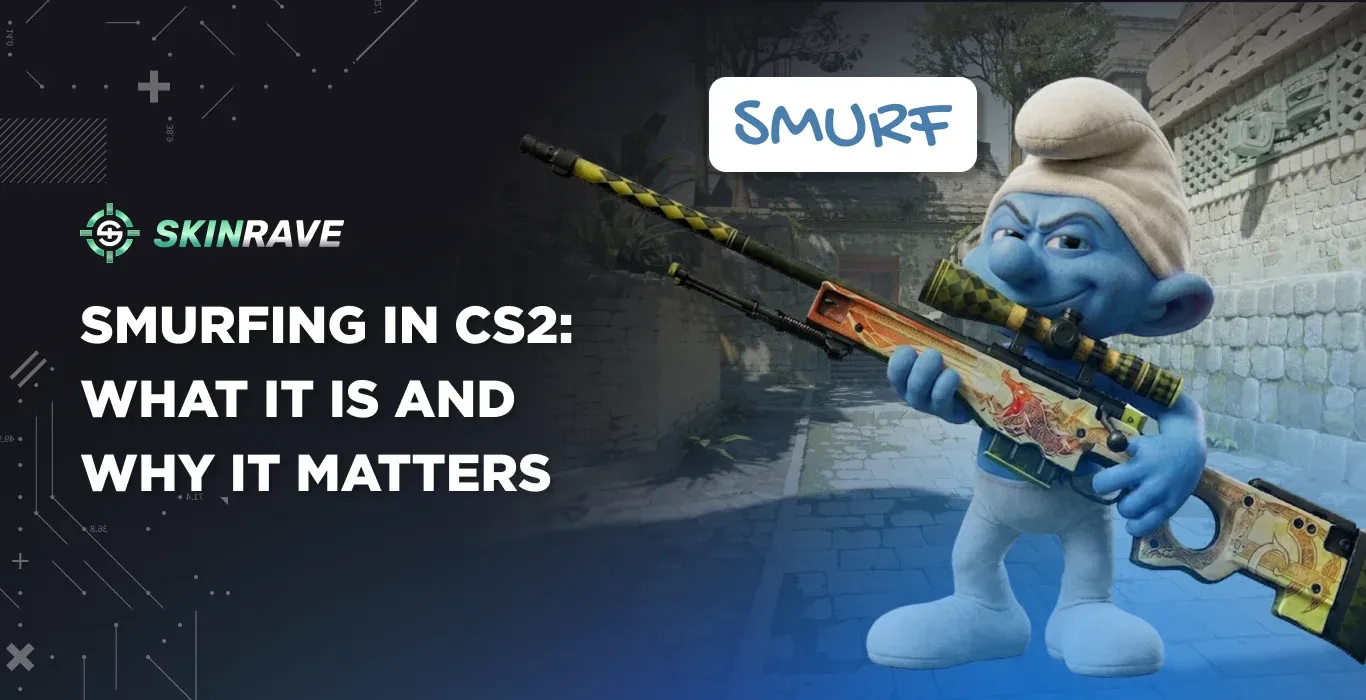
Smurfing is when a highly skilled, high-ranked player uses an alt account to compete against less skilled, lower-ranked opponents. In CS2, it specifically refers to a better player using a secondary account to queue into lower-ranked matches against less skilled opponents, creating unfair and one-sided matches.
This creates an incredibly toxic cycle that ruins matches for everyone involved, because to get a smurf account, players generally have two main routes (and both of them are terrible for the game):
First, they might intentionally throw games to derank (or in the case of a fresh account, throw the placement matches to rank as low as possible) means wasting teammates' time and energy. Then, once they're at the bottom, they demolish genuine beginners on the way up.
The second route isn't any better and it involves buying low-level accounts, which indirectly funds the bot farms already flooding CS2 servers.
Ultimately, it's just one problem bankrolling another.

Fun fact: the word "smurf " was first used in 1996, in a game called Warcraft 2, where a player named “Shlonglor” created a secondary account named “PapaSmurf” to play against inexperienced users.
From then on, the practice of creating a secondary account using “smurf” in the nickname became a regular thing.
Smurfing Is Arguably a Bigger Problem for CS2 Than Cheating
Cheating is the obvious villain. Everyone knows it's wrong, Valve bans for it, and most players report it on sight. A cheater might ruin a few games, but there's a ceiling where they will eventually get caught.
Smurfing is harder to pin down, and far more likely to go unpunished. It also doesn't look the same every time.
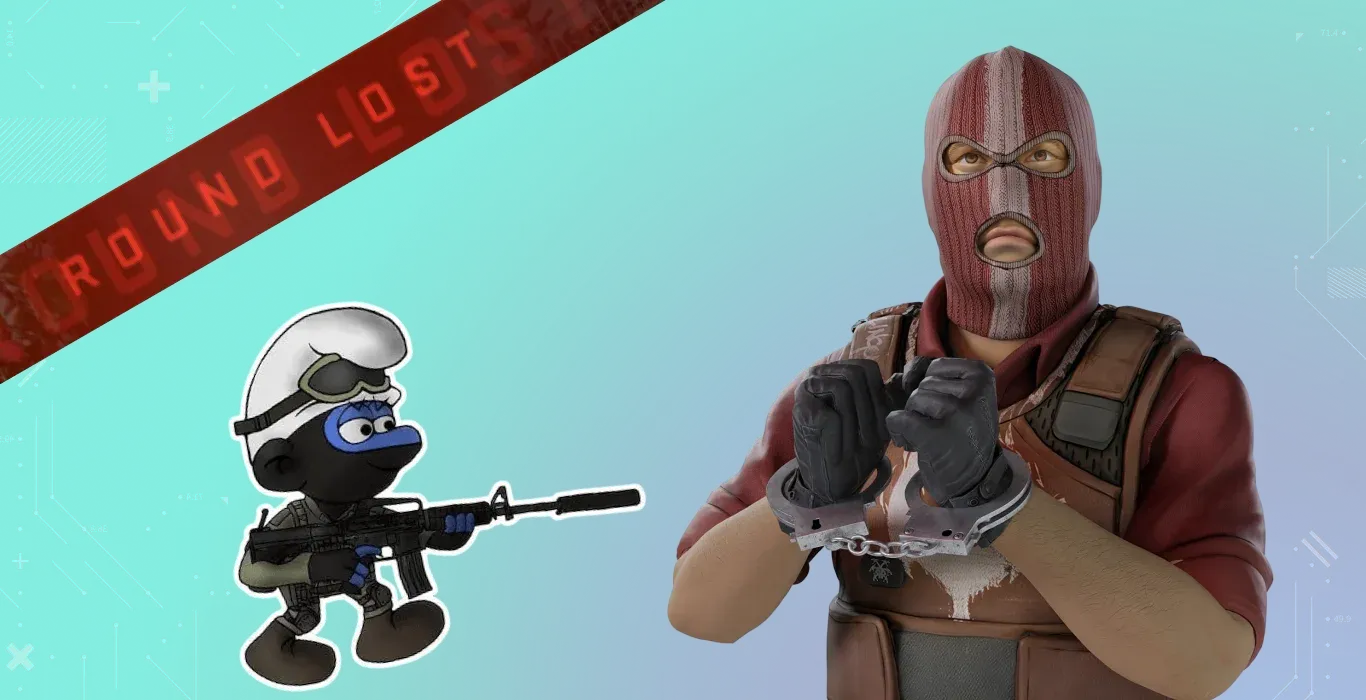
A player might grind a fresh account purely to sell it, but since that's how they can profit from it, they will do it as fast and as often as possible, flooding lower ranks with games that were never meant to be competitive.
They might not be there to stomp anyone deliberately, but the effect is the same.
The high variety of reasons players smurf, and how rarely they realistically face consequences, is what makes it so corrosive for the game.
And the damage shows up everywhere:
- New player discouragement: Most beginners won't think "I just played a smurf." They'll feel outmatched, get frustrated, and just quit.
- Matchmaking integrity: The purpose of the ranked matchmaking system is to create balanced, fair, and competitive matches. However, when smurfs enter the game, the matchmaking system becomes less accurate and reliable.
- Harm to team dynamics: Bought (boosted) accounts flip the problem around. Players buy the rank without the skill to back it up, and their whole team ends up paying for it.
- Community trust: Once smurfing becomes common enough, suspicion becomes the default. Even players who are legitimately good start getting side-eyed, because nobody trusts what they're seeing anymore.
Why Players Smurf in CS2
There are many reasons why players smurf, but most of the time it is for self-satisfaction or profit gain.
- Relaxation and Experimentation: High-ranked players sometimes create smurfs to step away from the pressure of competitive lobbies, a low-stakes space to experiment with new weapons, test strategies, work on mechanics, or simply mess around without anything real on the line.
- Boosting: Some players create smurfs to carry others through matches — gifting them wins and pushing their rank well beyond their actual skill level. This happens either as a favor for friends or as a paid service, but either way it comes at everyone else's expense.
- Account Sales: There's an active market for high-ranked accounts. Experienced players rank up low or fresh accounts (essentially smurfing with a purpose) and sell them on third-party marketplaces.
- Reputation Reset: Repeated reports for toxicity or griefing can tank a player's trust factor, dragging them into worse and worse lobbies. At that point, a fresh account feels like the quickest way out, but leveling it up means going through lower-ranked matches all over again, adding even more smurfing to the cycle.
How to Identify a Smurf in CS2 and What You Can Do About It
If you suspect that someone in your lobby is smurfing, here are the signs to look for:
- Profile and game history: Pull up their Steam profile. If CS2 is the only game on the account, they have under 100 hours, and they're playing way above the lobby's level, that's a first red flag.
- Gameplay quality: Smurfs stand out. Consistent headshots, perfect crosshair placement, and perfect nade lineups are also signs. These aren't things low elo players care or know about. Pair that with a K/D that's completely out of step with everyone else in the match and it's usually pretty obvious.
- Empty inventory: Most experienced CS players have at least some skins or stickers. Smurf accounts are usually bare because whoever made it has no interest in investing money into a throwaway account.
- Empty friends list: Smurf accounts tend to be anonymous by design. No friends, no community presence, just the account.
- No nickname history: Real accounts usually accumulate a few name changes over time. A smurf account usually has one random string of characters and nothing else in the history (and a sign the account was made to be sold, not played on).
Once you’re confident you’ve identified a smurf, report them in-game and on their Steam profile.
In the in-game menu, report them for Griefing if they are throwing to stay at a low rank, or Wallhacking/Aim Hacking if you are sure that they are smurfing.
On their Steam Profile, click "Report Player," select "They are cheating in a game," and in the description box, specifically mention "Matchmaking Abuse" or "Rank Manipulation."
Now, while Valve rarely bans for skill alone, reporting for these specific violations increases the chance that the account's Trust Factor will drop, eventually moving them out of your matchmaking pool.
Ways to Avoid Smurfs in CS2
If you haven’t already, get Prime Status. It’s a one-time purchase that acts as a paywall, filtering out the most "low-effort" smurfs who won't pay for a second account.
For the most consistent experience, consider moving to FACEIT.
Their enforcement is much stricter: they have a dedicated smurfing report option, and if they confirm a player has multiple accounts, they will permanently ban the alt account and penalize the main account.
Many of their queues now even require ID verification, making it harder for smurfs to cycle through new profiles.
Still, If you do get stuck in a match against one, use it as a "free" coaching session.
Watch the demo afterward to study their utility usage and positioning. Since the Elo loss is likely inevitable, you might as well take the opportunity to see how a higher-level player exploits your rank’s common mistakes.
FAQ
Before we wrap up, let’s go over a few common questions and misconceptions about smurfing in CS2:
Can you get banned for smurfing in CS2?
Yes, smurfing can lead to account penalties or bans in CS2, although enforcement is not always immediate or consistent. Valve uses reports, account behavior, and matchmaking data to review suspicious accounts.
How does Valve detect smurf accounts in CS2?
Valve uses a combination of player reports, phone verification, behavioral patterns, and matchmaking data to flag suspicious accounts. However, smurfing is harder to detect than obvious cheating, which is why enforcement can feel less visible to players.
Can buying or selling a smurf account get you banned?
Yes. Steam restricts account transfers and account sales, so both buyers and sellers risk losing the account and any items attached to it if they are caught.
Does FACEIT allow smurfing?
No. FACEIT has stricter anti-smurf rules than regular CS2 matchmaking. Smurf accounts can be banned, linked main accounts can be penalized, and some queues use identity verification to limit multi-account abuse.
Why is smurfing a problem in CS2?
Smurfing is a problem because it creates unfair and one-sided matches, ruins the ranking experience, discourages new players, and damages trust in the matchmaking system.
How are smurf accounts usually made in CS2?
Smurf accounts are usually fresh or alternate accounts created to enter lower-ranked matches. Some are also obtained through third-party account sales, which creates even more problems for the game’s competitive environment.
Is smurfing worse than cheating in CS2?
Some players believe smurfing can be just as damaging as cheating because it is more common, harder to prove, and often goes unpunished for longer. While cheating is more obvious, smurfing can quietly damage matchmaking over time.
Can you report smurfs in CS2?
Yes. Players can report suspicious accounts in-game, and repeated reports may help flag accounts for further review. Reporting does not always lead to instant action, but it still helps Valve identify abusive behavior.
Why does smurfing still exist in CS2?
Smurfing still exists because it is relatively easy to do, harder to detect than blatant cheating, and not always punished quickly. That is why it remains a long-term issue for fair play in CS2.