CS2 vs Valorant (2026): Which Game Should You Play?
Valorant's launch on June 2, 2020, started an argument among FPS players: do you stick with Counter-Strike (now Counter-Strike 2) or switch to Riot's new title?
Both are tactical shooters, but they differ in many technical and community-oriented aspects.
Below, we place vital features of both against one another, based on the recent statistics and industry analysts.
Tickrate
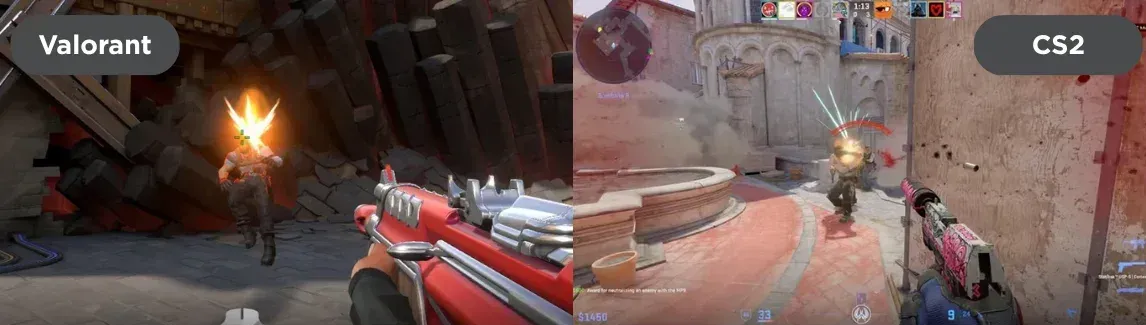
Valorant: Official Riot servers are made to run at 128 Hz tickrate, meaning game state updates (e.g., players' movement and shooting) are sent 128 times per second. Riot selected 128 Hz for the maximum reaction time and responsiveness.
Counter-Strike 2: Valve's live matchmaking servers have a 64 Hz tick. CS2 added the new sub-tick system to improve the accuracy of networks, but it defaults at 64 Hz.
In practice, this means Valorant's server updates are half of CS2's in competitive matches. With CS2's release, the players complain a lot that the direct-hit shots do not land. But in Valorant, there have been very few such complaints.
Anti-Cheat
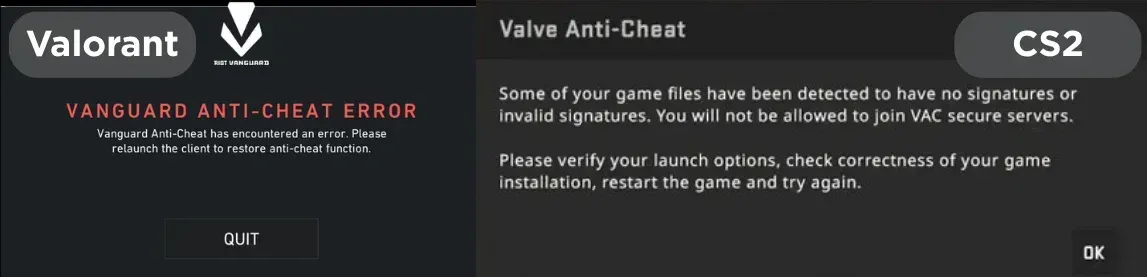
Valorant: Uses Riot Vanguard, a kernel‑level anti-cheat that boots on system start-up. It runs with high privileges all the time (even when out of game), allowing it to catch early-loading cheats.
Riot argues this is needed in order to stop advanced cheats.
Counter-Strike 2: Relies on Valve Anti‑Cheat (VAC), which is only engaged when the game is launched. VAC is not engaged at startup and is generally less invasive.
Although Valorant’s strict system leads to aggressive bans, some people complain that allowing a program to run on your device at all times is unethical. That is one of the reasons people prefer CS over Valorant.
Community and Discipline
CS2: The Counter-Strike community has a long history of being toxic. There are also consequences for match abandoning or disruptive gameplay, but they increase with repeat offenses.
Competitive abandoning, for example, causes increasingly longer cooldowns – 30 minutes initially, 2 hours, 24 hours, and then a week. Most players don't think it takes to repeat bad activity before an extended ban.
Valorant: Riot maintains an explicit progressive ban for team-play and behavior. Misbehavior incurs team-play queue bans (usually a few days) and eventually game bans (first 7 days, up to permanent).
In practice, reports show repeated quitters get 1-day bans, then 3-day bans, and so on. Valorant's system is more straightforward and progressive with rising severity for each offense aimed to deter toxicity earlier.
Movement
Valorant: Gameplay is slower and more restricted movement. Firing while strafing is not allowed, and crouch-walking is very slow.
As one analyst in a forum indicates, "general movement speed is slower than CSGO." Agents also have vertical jumps/abilities, so they tend to do quick up-down flicks often; this added vertical movement might make aim feel different.
CS2: Counter-Strike allows for faster strafing and more intricate movement tricks. Strafing and bunny-hopping are employed by competent players to move in a rush.
You can shoot while moving full speed, and crouch-peeking is simply business as usual. CS2's movement is generally more speed-oriented and dynamic in contrast with the more tactical positioning of Valorant.
Skins and Cosmetics
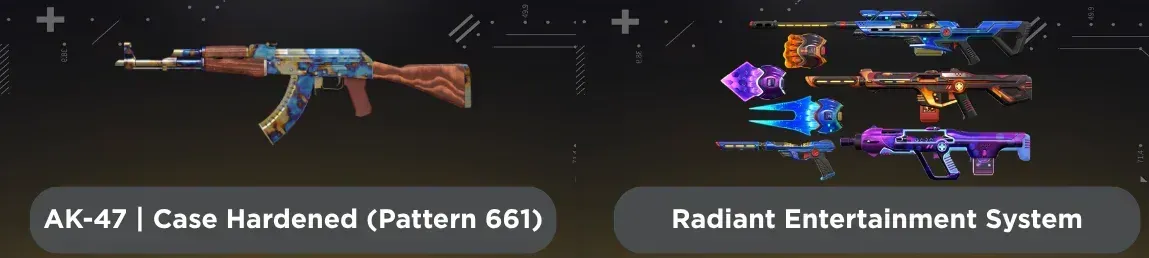
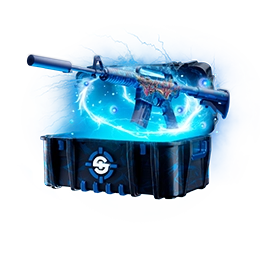
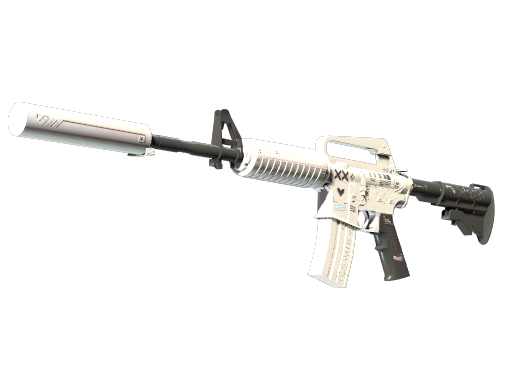
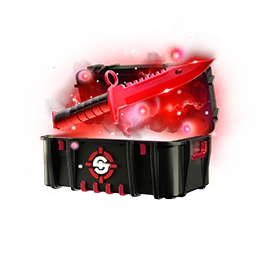
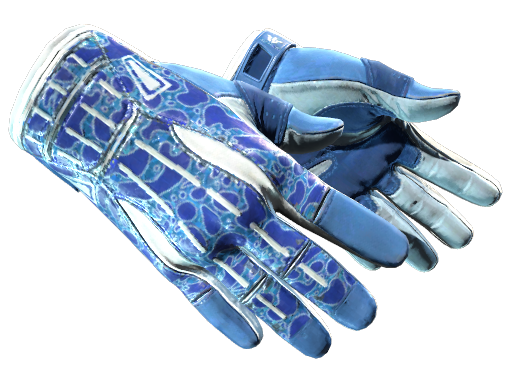
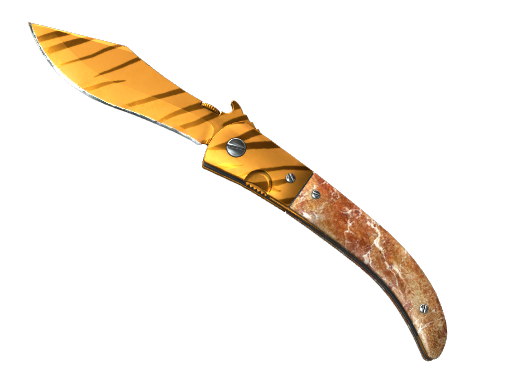
All of the weapon skins in CS2/CS:GO are playable, tradable cosmetics with absolutely no effect on gameplay.
The economy of skins is player-driven and highly volatile: prices go up and down with demand. Unused 2014 stickers bought for ~$1 now sell for over $40,000.
Yet each skin is unique, and the variety
In contrast, Valorant only directly sells skins off its own marketplace and events.
No player trading occurs. Valorant occasionally has bundles or the discounted "Night Market", but otherwise players must purchase skins outright.
This closed ecosystem results in Valorant skins being set in stone with regards to price and exclusivity, as opposed to CS2's player-driven marketplace.
Community Servers
CS2: Similar to CS:GO, Counter-Strike 2 supports community-run servers and user-created game modes.
With Steam Workshop, there are literally thousands of custom maps and mods to choose from (surf maps, bunny-hop mode, hide-and-seek, zombie modes, etc.).
This extended tradition allows fans to craft and distribute completely new content.
Valorant: Riot does not yet support third-party servers or community-created maps.
According to Valorant's devs, it would take "years" to build the tools to allow players to create maps.
For the meantime, players can only play Riot's official map set and modes. (Riot's emphasis has been on core content, so custom modes don't expect to come anytime soon.)
Esports
Counter-Strike has a much longer esports legacy (with Majors dating from 2000), while Valorant's pro scene began in 2020.
Grounded in reality, CS2 esports events receive more viewership.
Recent data shows CS2 esports still performs better compared to Valorant in viewership. For example, the PGL Copenhagen 2024 CS2 Major peaked at around 1.85 million concurrent viewers, while Valorant's biggest event (Masters 2024 Bangkok) touched around 1.69 million viewers.
Based on the metrics in 2024, Counter-Strike 2 uses "nearly twice the airtime hours" of Valorant. Though the ecosystem of Valorant is going global and swelling, today CS2 is still the more-watched shooter sport.
Weapons and Recoil
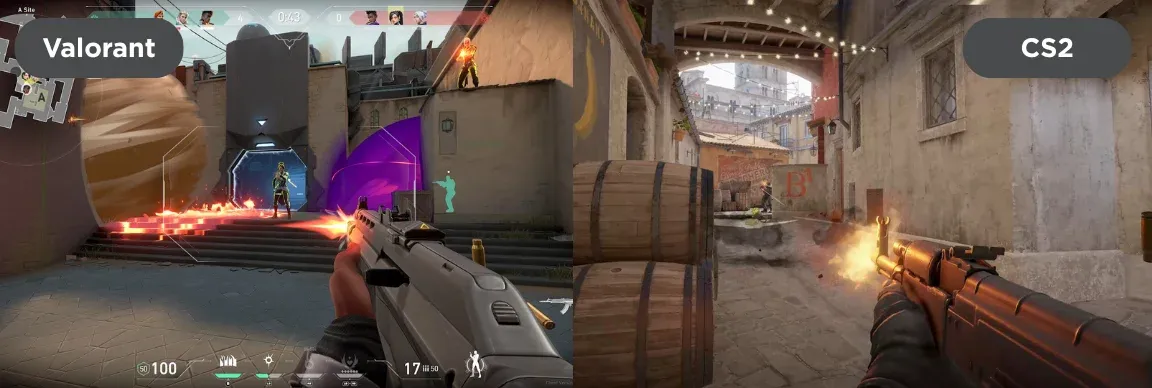
CS2: Incorporates conventional CS guns, such as team guns (e.g., CT uses the M4 rifle against Terrorists' AK).
Guns have intricate recoil patterns and damage models. One needs to study every spray pattern to be able to handle long bursts. CS's old "sloping" recoil can be difficult to master.
In fact, statistical analysis has shown that CS:GO players registering higher headshot rates, a sign of the skill required to handle recoil.
Valorant: Both teams have access to all guns (no side-restricted guns). Valorant's rifles (like the Vandal) have sharp recoil patterns that are easier to control than CS2's.
Most importantly, Valorant features no random bullet spread aside from recoil, so shot placement is more consistent.
As one study notes, Valorant's recoil "snaps" right-left, which many prefer to CS2's more sweeping drift. This makes Valorant's gunplay more forgiving; commentators often remark that CS2's increased headshot rates are the result of having successfully mastered CS's harder recoil.
Graphics and Art Style
CS2: Draws on Valve's Source 2 engine with enhanced graphics.
Maps and textures have been overhauled in order to allow for more modern lighting and detail.
The result is a neater, more realistic look (though still quite stylized), continuing Counter-Strike's grimy, tactical look.
Valorant: Used a bright, stylized (almost cartoon-style) artwork.
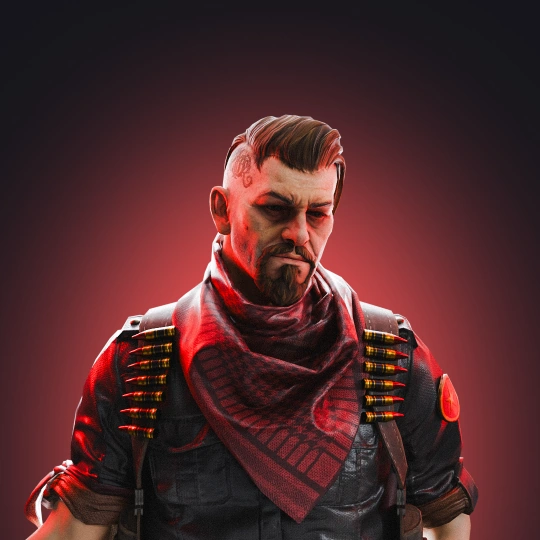
Agents have distinctive, bold-colored appearances, and maps are colored in a bold manner. Some call it "not realistic" or even "cartoon-like", but it offers easy visibility and problem-free gameplay.
Riot specifically used the less-complex format so that it would be gameable on low-end PCs.
Optimization and Performance
Valorant is very well optimized.
Its low-end demands are trivial – to run at 30 FPS, it only needs a Core 2 Duo CPU with Intel HD 4000 graphics, and even lowly contemporary PCs have no problem reaching 144+ FPS.
Riot actually says "optimized for hardware" as one of the primary benefits of Valorant.
CS2's newer engine, in contrast, is more demanding.
For several players, the game CS2 requires the same high-end GPU/CPU for the same frame rates obtained in CS:GO, and some have had spotty performance, which leads to stuttering and frame dropping, depending on how old a system is used.
Practically speaking, Valorant runs on much weaker hardware than CS2, which lends credence to Riot's vision for mass accessibility.
Conclusion
Both CS2 and Valorant deliver amazing tactical FPS experiences that cannot appeal to the same crowds.
CS2 is about pure mechanical skill, complex recoil control, and a rich, player-based economy — suited best to those who value mastery and realism.
Valorant values accessibility, predictable play, and a less cluttered competitive system upheld by hard anti-cheat and moderation.
Depends on what you value higher — expression and liberty, or equity and parity.